TikTok Joins Google and Meta in Lawsuit Against California Over New Social Media Law
November 9, 2026
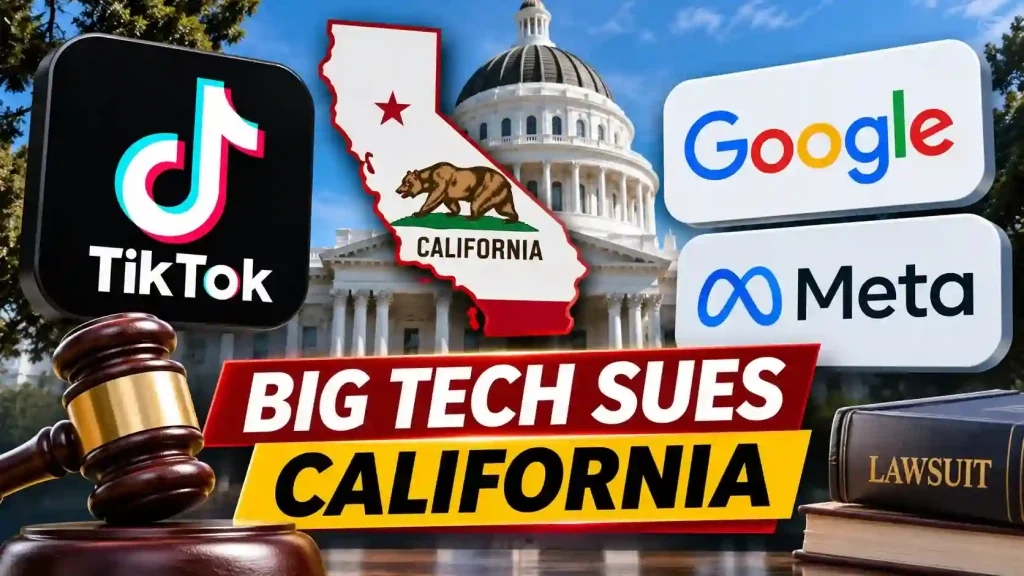
TikTok has joined Google and Meta in challenging a new California law that aims to restrict potentially addictive social media features for children and teenagers. The three technology companies have filed separate lawsuits against California, arguing that the legislation interferes with their First Amendment rights and limits how they organize and recommend content to younger users.
The legal challenge centers on California’s Assembly Bill 1709 (AB 1709), a new piece of legislation designed to prevent children under the age of 16 from accessing certain social media features, including personalized recommendation feeds, autoplay videos, and other engagement-focused tools.
The law was signed by California Governor Gavin Newsom on September 10, 2026, and is scheduled to take effect on January 1, 2027, unless the courts block or delay its implementation.
The lawsuits represent another major development in the growing debate over social media regulation, children’s online safety, and the responsibilities of major technology platforms. TikTok, YouTube, Facebook, and Instagram could all face significant changes to their services if California’s legislation survives the legal challenges.
Why Did TikTok, Google and Meta Sue California?
The three companies are challenging California’s new legislation because they believe the government is interfering with their ability to control how content is presented and recommended on their platforms.
Although TikTok, Google, and Meta filed separate lawsuits, their central arguments are similar. They claim that California’s restrictions violate constitutional protections for free speech and conflict with Section 230 of the Communications Decency Act.
The companies argue that content recommendation systems are an important part of how modern digital platforms operate. These systems organize billions of posts and videos according to users’ interests, preferences, and viewing activity.
TikTok has particularly emphasized that content curation based on user preferences is a protected form of expression. The company argues that lawmakers should not be able to suppress protected speech simply because they consider certain content or presentation methods unsuitable for younger audiences.
Meta has also challenged the state’s authority to control how its platforms organize and display third-party content. Google, which owns YouTube, argues that the restrictions could interfere with systems designed to provide age-appropriate video experiences.
All three companies are asking federal courts to prevent California from enforcing the legislation.
What Is California’s AB 1709 Law?
Assembly Bill 1709 is a California law designed to address concerns about social media addiction and the potential effects of engagement-driven platform features on children.
The legislation focuses on features that encourage users to spend extended periods on social media applications.
Unlike a complete ban on social media, AB 1709 specifically targets certain platform features that lawmakers consider potentially harmful to users under 16.
Some of the key features affected by the legislation include:
- Personalized recommendation feeds: Algorithms that continuously recommend videos and posts based on individual user activity and preferences.
- Autoplay videos: Features that automatically play another video after the previous one finishes.
- Endless scrolling: Interface designs that allow users to continuously browse content without reaching a natural stopping point.
- Age verification measures: Platforms must take reasonable steps to prevent underage users from accessing restricted features.
- Account restrictions: The law requires platforms to address accounts belonging to children under 16 that continue to have access to prohibited features.
The legislation is intended to reduce excessive social media engagement among younger users and give families greater protection against potentially harmful online experiences.
However, technology companies argue that the restrictions are too broad and could interfere with the normal operation of their services.
Why Is TikTok Particularly Concerned About the New Law?
TikTok relies heavily on its recommendation algorithm to deliver personalized videos through its For You feed.
The platform analyzes different signals, including viewing behavior, likes, comments, shares, and other interactions, to recommend videos that may interest individual users.
This recommendation system is one of the defining characteristics of TikTok’s user experience.
Under AB 1709, TikTok could face restrictions on providing personalized recommendation features to users under 16 in California.
This could require the company to develop a different experience for younger users in the state.
For example, TikTok might need to introduce additional account restrictions, modify recommendation settings, or prevent certain features from operating for users who fall within the law’s age restrictions.
The company has argued that content curation based on user preferences is a long-standing and protected practice used across different forms of media, including television networks, bookstores, and streaming platforms.
TikTok also maintains that the legislation could undermine existing efforts to improve online safety for teenagers while restricting their ability to discover content based on their interests.
The lawsuit therefore raises an important question: how much control should governments have over the recommendation systems used by social media platforms?
What Does Google Say About California’s Social Media Restrictions?
Google has also filed a lawsuit challenging AB 1709.
The company owns YouTube, one of the world’s largest video-sharing platforms, where personalized recommendations and autoplay are important parts of the viewing experience.
Google argues that California’s legislation could interfere with the systems it has developed to provide appropriate content to younger audiences.
The company says parents should have the ability to make decisions about their children’s online activities and points to its existing parental control tools and safety protections.
Google spokesperson José Castañeda said overly broad restrictions could damage systems designed to help younger users discover high-quality and age-appropriate videos.
The company’s legal challenge also focuses on free speech protections and the potential conflict between California’s law and federal internet regulations.
For YouTube, the outcome could affect how recommendations, autoplay, and other video discovery features work for younger viewers in California.
Why Is Meta Also Challenging California?
Meta, the parent company of Facebook and Instagram, is the third major technology company challenging the legislation.
Like TikTok and Google, Meta relies on personalized content recommendations to organize information across its platforms.
Facebook and Instagram use recommendation systems to display posts, videos, Reels, and other content based on user interests and engagement.
Meta argues that AB 1709 improperly allows the government to influence how ideas and third-party content are organized and presented to users.
The company says the legislation violates the First Amendment by interfering with its editorial decisions.
Meta has also raised concerns that the law could force it to remove certain features or restrict access for thousands of teenagers in California.
The company believes parents should have greater control over their children’s online experiences rather than having the state determine which platform features can be available.
Where Were the Lawsuits Filed?
Although the three companies are challenging the same California legislation, they have filed their lawsuits separately in different federal courts.
According to Reuters, the legal filings were distributed as follows:
| Company | Court location |
|---|---|
| San Jose, California | |
| Meta | San Francisco, California |
| TikTok | Los Angeles, California |
California Attorney General Rob Bonta is the defendant in the cases because his office is responsible for enforcing the state’s laws.
The Attorney General’s office said it was reviewing the lawsuits and remained committed to defending California’s laws designed to protect children online.
As of November 9, 2026, the lawsuits have not resulted in a final court decision blocking or overturning AB 1709.
What Happens If California Wins the Legal Battle?
If the courts reject the companies’ arguments and allow AB 1709 to take effect, TikTok, Google, and Meta will have to comply with the legislation.
This could result in several changes to how their platforms operate for younger users in California.
TikTok may need to modify its For You recommendation experience for users under 16. YouTube could face changes involving video recommendations and autoplay, while Instagram and Facebook may need to adjust their personalized feeds and other engagement-focused features.
The companies could also be required to strengthen age-related restrictions and introduce additional measures to prevent younger users from accessing prohibited features.
These changes would primarily affect users covered by the California law rather than automatically applying to every TikTok, YouTube, Facebook, or Instagram user worldwide.
However, technology companies sometimes introduce broader product changes when complying with regional regulations becomes complicated.
Whether any changes would eventually extend beyond California remains uncertain.
What Happens If TikTok, Google and Meta Win?
If the courts agree with the companies’ constitutional arguments and block the legislation, California could face significant difficulties implementing AB 1709 in its current form.
A court could issue an order preventing enforcement while the case continues or ultimately rule that particular provisions cannot stand.
Such an outcome could allow the affected platforms to continue offering their existing recommendation and autoplay features to younger users in California, subject to other applicable laws and safety requirements.
However, a legal victory would not mean that TikTok, Google, and Meta are exempt from all child-safety regulations.
The companies would still have to follow other federal and state requirements concerning privacy, online safety, and the protection of minors.
The final outcome will depend on the arguments presented in court and how judges interpret the constitutional issues involved.
The Bigger Picture: Social Media Companies Face Growing Legal Pressure
The California lawsuits come at a time when major social media companies are facing increasing legal scrutiny over their effects on children and teenagers.
Parents, schools, government authorities, and other organizations have raised concerns about excessive screen time, social media dependency, cyberbullying, and the potential effects of online platforms on young people’s mental health.
Several lawsuits in the United States have accused technology companies of designing features that encourage compulsive social media use.
TikTok, Meta, Google, and other platforms have faced legal challenges related to these concerns.
The companies have generally disputed allegations that their services are responsible for the mental health problems experienced by young users, while pointing to their safety features and parental controls.
California’s AB 1709 represents a different part of this wider debate because it directly targets how platforms design and deliver content to minors.
The legal dispute is therefore not simply about one state’s social media policy. It also raises broader questions about digital privacy, freedom of expression, parental authority, and the responsibilities of technology companies.
Will California’s Law Affect TikTok Users Outside the United States?
At present, AB 1709 is a California state law. Its restrictions are aimed at covered users under 16 within the state’s jurisdiction.
This means TikTok users in countries such as Pakistan, the United Kingdom, Canada, and Australia should not assume that their accounts will automatically be affected by this particular legislation.
However, the legal battle could have wider implications for the technology industry.
Governments around the world are examining how recommendation algorithms, autoplay videos, and other engagement-based features affect younger audiences.
If California successfully defends its legislation, other states or jurisdictions could consider similar approaches.
On the other hand, if the technology companies successfully challenge the law, the court’s reasoning could influence future debates about the limits of government regulation over social media platforms.
For now, users outside California can continue using TikTok according to the rules and features available in their respective regions.
What Happens Next in the TikTok, Google and Meta Lawsuits?
The next major development will depend on how the federal courts handle the three legal challenges.
The companies want the courts to prevent California from enforcing AB 1709 before its scheduled January 1, 2027, implementation date.
California Attorney General Rob Bonta’s office has indicated that it intends to defend the legislation.
The legal proceedings could determine whether California has the authority to restrict specific social media features for younger users or whether those restrictions violate constitutional protections.
Until the courts issue further decisions, the future of AB 1709 remains uncertain.
The dispute also highlights the growing tension between technology companies seeking to preserve their existing platform designs and governments attempting to introduce stronger protections for children online.
For TikTok, the outcome could have important consequences for its recommendation algorithm and the experience it provides to millions of younger users.
Frequently Asked Questions (FAQs)
1. Did TikTok sue Google and Meta?
No. TikTok did not sue Google or Meta. All three companies filed separate lawsuits against California to challenge Assembly Bill 1709, a law restricting certain social media features for users under 16.
2. Why are TikTok, Google and Meta suing California?
The companies argue that California’s new law violates First Amendment free speech protections and conflicts with Section 230 of the Communications Decency Act. They believe the legislation interferes with how platforms organize and recommend content.
3. What is AB 1709?
AB 1709 is California legislation designed to restrict certain potentially addictive social media features for children under 16, including personalized recommendations, autoplay videos, and endless scrolling.
4. When will California’s AB 1709 law take effect?
The legislation is scheduled to take effect on January 1, 2027, unless a court blocks, delays, or overturns it.
5. Will TikTok’s For You Page be affected?
The law could restrict personalized recommendation features for covered users under 16 in California. The exact impact on TikTok’s For You Page will depend on the court proceedings and how the company implements any required changes.
6. Will the new California law affect TikTok users in Pakistan?
No direct effect on Pakistani users is established by this California legislation. AB 1709 is a California state law targeting covered users within its jurisdiction.
7. Which companies are challenging California’s social media law?
TikTok, Google, and Meta have each filed separate legal challenges against California. Google owns YouTube, while Meta operates Facebook and Instagram.
8. Has a court blocked California’s AB 1709 law?
As of November 9, 2026, no final court decision blocking or overturning the legislation has been reported. The legal challenges remain an ongoing matter.
Final Thoughts
The lawsuits filed by TikTok, Google, and Meta mark another important chapter in the debate over social media regulation and children’s online safety.
California wants to restrict features it considers potentially harmful to younger users, while the technology companies argue that the legislation interferes with free expression and their ability to organize digital content.
The outcome could influence how major platforms design recommendation systems and protect younger audiences in the future.
With the law scheduled to take effect in January 2027, the coming weeks could be particularly important for TikTok, YouTube, Instagram, and Facebook as the legal battle develops.