TikTok’s Role in Everyday Life — And What Happened After the US Ban
Introduction: A 15-Second Revolution
There was a time when people sat through three-minute YouTube tutorials just to learn how to fold a fitted sheet. Today, they scroll past it in 15 seconds on TikTok — and somehow still remember it a week later.
That is the quiet genius of TikTok. It did not just build another social media platform. It rewired the way human beings consume information, entertainment, education, and even commerce. From a teenager in Lahore learning English through skits to a small bakery owner in Chicago doubling her sales through viral food videos — TikTok became the great equalizer of the digital age.
But in early 2025, the United States government passed legislation that effectively banned TikTok on American soil, setting off a chain reaction that shook the entire social media ecosystem. The aftermath was messy, revealing, and in many ways, completely unpredictable.
This article takes a deep look at what TikTok’s actual role has been in modern daily life — and what happened, both online and offline, after the US attempted to shut it down.
TikTok’s Role in Everyday Life: More Than Just Dance Challenges
1. Content Consumption Has Been Permanently Redefined
Before TikTok, attention spans on social media were already shrinking — but TikTok accelerated the process in a way no platform before it had managed. Its algorithm, powered by machine learning, does not care whether you follow an account or not. It figures out what you like based on how long you pause on a video, whether you replay it, and whether you share it. Within a few sessions, it knows your interests better than most people in your life do.
This model of content delivery — hyper-personalized, frictionless, and infinitely scrollable — became the new standard. Platforms like Instagram (with Reels), YouTube (with Shorts), and Snapchat (with Spotlight) all scrambled to replicate it. TikTok did not just win a format war; it changed what users expected from every platform they touched.
2. Education and Information Have Gone Vertical
One of the most underrated roles TikTok has played in everyday life is as an educational tool. Across the globe, people have learned to cook, code, manage anxiety, understand history, and even navigate legal situations — all through short-form video content.
The hashtag #LearnOnTikTok accumulated hundreds of billions of views. Doctors explained medical conditions without jargon. Teachers broke down complex physics equations using props from their kitchen. Financial advisors explained compound interest to people who had never opened a savings account. The format forced clarity in a way that a 10,000-word blog post never could.
For developing countries especially, this democratization of knowledge was significant. In regions where formal education infrastructure is weak or expensive, TikTok became a freely accessible knowledge hub — available 24/7, in dozens of languages, and on any smartphone.
3. Small Business Growth and the Creator Economy
TikTok did something extraordinary for small businesses: it made virality accessible without a large advertising budget. A single well-made product video could reach millions of people overnight, regardless of how many followers the account had. This was fundamentally different from Instagram or Facebook, where reach was largely tied to follower count or paid promotion.
The TikTok Shop feature, which rolled out aggressively in 2023 and 2024, further blurred the line between entertainment and commerce. Viewers could buy a product while watching a video about it, without ever leaving the app. For small manufacturers, artisans, and niche product sellers, this was transformative. Reports from 2024 showed that TikTok Shop was generating billions in Gross Merchandise Value, competing directly with established e-commerce platforms.
For individual creators, the platform gave birth to a new generation of full-time content professionals. Unlike older influencer models that required years of audience building, TikTok’s algorithm gave new creators a genuine shot at wide reach from their very first videos.
4. Mental Health, Culture, and Social Movements
TikTok has also played a complex role in shaping social behavior and mental health discourse. On one hand, the platform provided a community for people dealing with anxiety, depression, chronic illness, and social isolation. Niche communities formed around shared experiences — people with ADHD found each other, trauma survivors found language for their experiences, and first-generation immigrants found cultural solidarity in a strange country.
On the other hand, critics — and even researchers — pointed to the addictive nature of the scroll, the impact of unrealistic beauty standards amplified through filters, and the risk of misinformation spreading in digestible but misleading formats. The platform has been a powerful two-sided coin, capable of lifting people up and pulling them down at the same time.
The US TikTok Ban: What Actually Happened
The Road to the Ban
The political journey toward banning TikTok in the United States was years in the making. Concerns about TikTok’s Chinese parent company, ByteDance, and its potential access to American user data had circulated since at least 2020, when the Trump administration first attempted to force a sale or shutdown of the app.
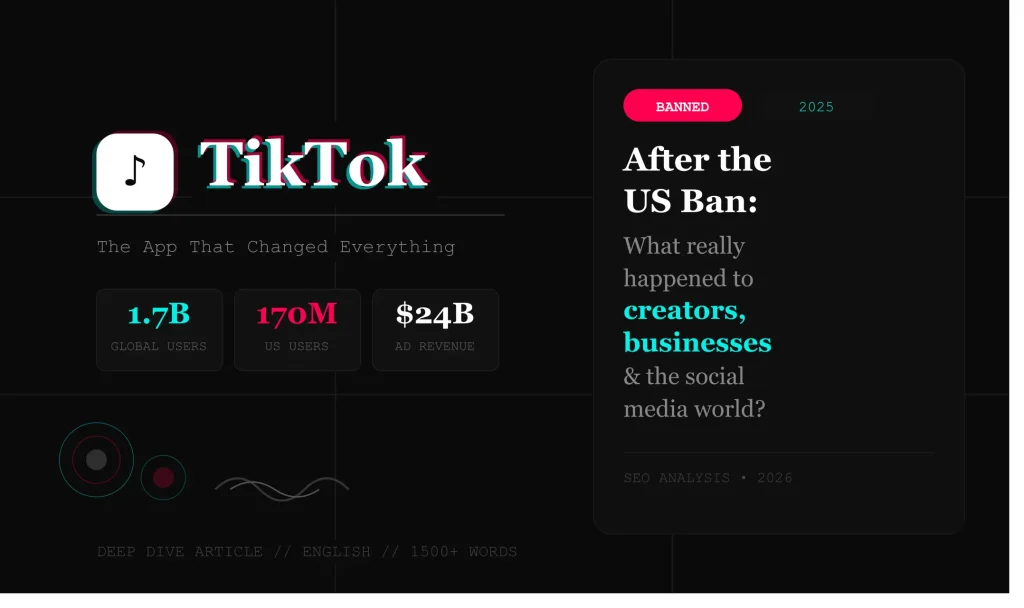
Those concerns never fully went away. By 2024, bipartisan consensus in Congress had hardened around the belief that a Chinese-owned platform with access to data from 170 million American users posed an unacceptable national security risk. In April 2024, the US Congress passed the Protecting Americans from Foreign Adversary Controlled Applications Act, which gave ByteDance approximately nine months to divest its ownership of TikTok or face a ban.
ByteDance contested the law in court, arguing it violated First Amendment protections. The courts disagreed. On January 19, 2025 — the day before the law was set to take effect — TikTok briefly went dark for American users.
The 75-Day Reprieve and the Political Chaos That Followed
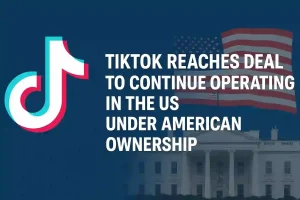
President-elect Donald Trump, who had himself tried to ban TikTok during his first term, intervened with an executive order granting a 75-day reprieve. The irony was not lost on anyone. Trump’s justification was that he wanted time to negotiate a deal that would allow TikTok to continue operating under some form of American ownership or oversight.
What followed was several months of intense, confusing, and often contradictory negotiations. Names like Oracle, Elon Musk, and various venture capital consortiums were floated as potential buyers or partners. ByteDance maintained it would not sell TikTok’s core algorithm — the very thing that made TikTok valuable — to any American buyer.
The situation remained unresolved for much of 2025, leaving creators, businesses, and users in a state of prolonged uncertainty.
The Immediate Impact on Creators and Businesses
The brief blackout of January 19, 2025 and the subsequent uncertainty caused measurable economic damage. Thousands of creators who relied on TikTok for their primary income scrambled to migrate their audiences to Instagram Reels, YouTube Shorts, and a rapidly growing Chinese alternative called Xiaohongshu (RedNote), which briefly became the number one downloaded app in the US App Store as a form of protest.
Small businesses that had built their marketing strategy around TikTok Shop faced a particularly harsh reckoning. Unlike large brands with diversified media spending, many small businesses had concentrated the bulk of their digital marketing on TikTok. The uncertainty disrupted their planning cycles, advertising commitments, and revenue projections.
Influencer marketing agencies reported a significant drop in brand spending on TikTok campaigns during the uncertainty period, as advertisers became reluctant to invest in a platform that might not exist in its current form next month.
What Happened to the Social Media Landscape
The attempted TikTok ban had ripple effects across the entire social media industry. Instagram aggressively accelerated its Reels product development. YouTube doubled down on Shorts monetization. Meta reportedly saw a spike in new creator sign-ups and brand advertising inquiries during the peak uncertainty around TikTok’s future.
Perhaps most interestingly, the ban attempt revealed just how dependent modern digital culture had become on a single platform. The fact that the removal of one app — even temporarily — could cause visible economic disruption, trigger congressional hearings, and generate weeks of news coverage said something profound about the depth of TikTok’s integration into American life.
There was also a broader geopolitical dimension. The ban attempt strained US-China tech relations further and prompted other governments to reconsider their own regulatory stances on foreign-owned platforms. India, which had already banned TikTok in 2020, appeared vindicated in its earlier decision. European regulators used the situation to advance their own digital sovereignty discussions.
Did the Ban Actually Work?
This is the question that most analyses dodge, and the honest answer is: not really, at least not in the way intended. TikTok continued operating in the US through the 75-day reprieve period and beyond, as negotiations dragged on. American users who wanted to access the app during the brief blackout found that VPNs worked effectively. Many did exactly that.
The episode illustrated a fundamental tension in digital regulation: governments can pass laws, but enforcement against a deeply embedded consumer platform with hundreds of millions of users is extraordinarily difficult. The economic cost of full enforcement — not just to ByteDance but to American creators, businesses, and advertisers — made aggressive action politically complicated.
The Bigger Picture: What TikTok’s Story Tells Us
TikTok’s arc from viral sensation to geopolitical flashpoint reflects something larger about the world we now live in. Social media platforms are no longer just entertainment products. They are infrastructure — for communication, commerce, education, cultural identity, and political organization. Decisions about who owns and operates them carry stakes that reach far beyond ad revenue and user growth metrics.
The question of what to do with TikTok remains genuinely unresolved as of mid-2026. The platform continues to operate, negotiations continue behind closed doors, and users continue to scroll. Meanwhile, the underlying tensions — between free expression and national security, between open internet and data sovereignty, between American consumers and geopolitical rivals — are not going away.
For anyone trying to understand the digital world of the 2020s, TikTok is not just a social media story. It is the story of the internet itself, still trying to figure out what it is and who it belongs to.