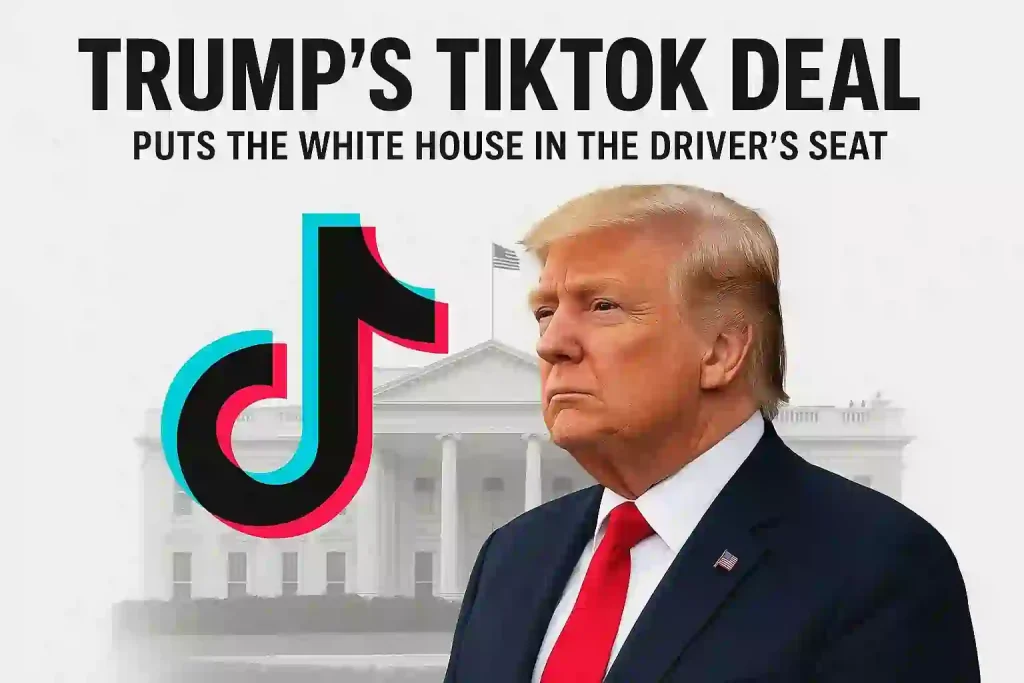
Trump’s TikTok Deal Puts the White House in the Driver’s Seat
In September 2025, U.S. President Donald Trump signed a new executive order that reshaped the future of TikTok’s operations in America. The order aims to transfer control of TikTok’s U.S. division to American investors, but it also gives the White House more authority over the app’s data, algorithm, and content moderation policies.
This move has raised questions about how much influence the government should have over one of the world’s most popular social media platforms. Let’s explore what the “Trump TikTok Deal” means for politics, business, and users.
Background: TikTok’s Legal and Political Challenge
The 2024 Law — PAFACA
In 2024, the U.S. government passed the “Protecting Americans from Foreign Adversary Controlled Applications Act” (PAFACA). The law required TikTok’s parent company, ByteDance, to sell its U.S. assets to an American entity or face a nationwide ban. The deadline was originally set for January 2025.
Executive Delays and Trump’s Return
When Trump returned to office, he delayed the enforcement several times. Then, in late September 2025, he introduced a new executive order that modified the original law. The revised version created a “compliance agreement” allowing TikTok to continue operating in the U.S. under new ownership terms while maintaining strict national security oversight.
Key Points of the Trump TikTok Deal
Ownership and Board Structure
Under the new agreement, ByteDance will hold less than 20% ownership of TikTok’s U.S. operations.
The board will have seven members six American representatives and one from ByteDance.
The White House and the Committee on Foreign Investment in the United States (CFIUS) will oversee compliance and ensure no unauthorized data transfers occur.
National Security Oversight
The deal gives U.S. agencies greater monitoring authority over TikTok’s data systems and algorithmic behavior.
This move reflects a new era where data and algorithms are treated as matters of national security rather than just business assets.
The order also empowers the Attorney General and other federal bodies to intervene if TikTok violates security or compliance rules.
Criticisms and Political Concerns
Risk of Political Control
Critics warn that the White House’s deep involvement could lead to biased decision-making or political censorship. If the government gains indirect control over TikTok’s algorithm, it could influence what content becomes visible to millions of users.
Trade Tensions and Chinese Approval
China’s approval is still required for the deal to be finalized. Given the rising trade tensions and tariff plans under the Trump administration, delays or retaliation from Beijing could complicate the process.
Nepotism Allegations
Reports have suggested that one of Trump’s family members might receive a role in the new TikTok board, raising concerns about favoritism and potential conflicts of interest. While unconfirmed, these rumors have fueled further public debate.
What It Means for the U.S., TikTok, and Users
For the U.S. Government
The government now becomes a major stakeholder in a platform that shapes youth culture, public discourse, and even elections. This gives the White House significant leverage over how information circulates online.
For TikTok and ByteDance
ByteDance’s control is being reduced, meaning less direct influence over TikTok’s American operations. The company must now operate under stricter rules and transparency measures while maintaining profitability.
For Users and Privacy
The biggest question is user privacy. With greater government oversight, can data truly remain protected? TikTok users may see increased transparency reports and more visible compliance disclosures, but experts stress the need for strong independent audits and privacy safeguards.
Conclusion
The Trump TikTok Deal is more than a business transaction — it’s a turning point in the relationship between technology, politics, and national security.
By giving the U.S. government a stronger hand in how TikTok operates, this move redefines the concept of digital sovereignty. Data, algorithms, and online speech are no longer just corporate assets — they’ve become instruments of state power.